
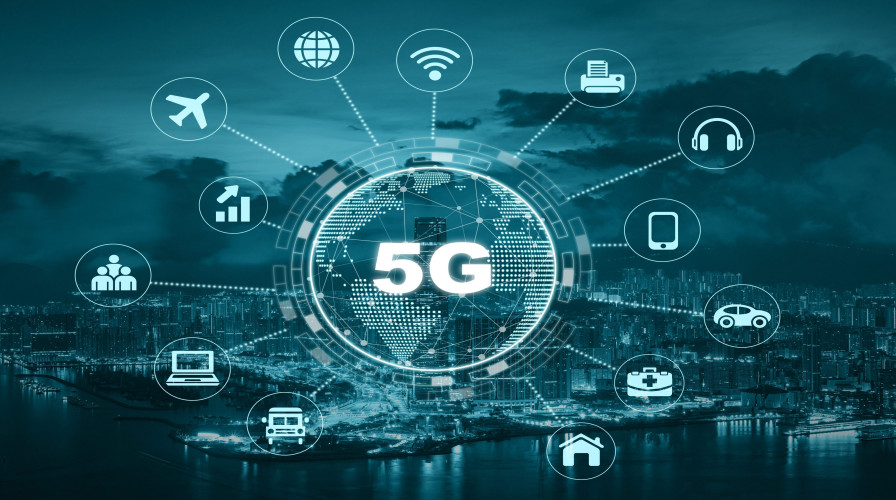
The intersection of emerging tech and 5G: Reshaping the telecom industry

Advancements in artificial intelligence (AI), blockchain and quantum computing are set to have a significant impact on the telecom, media and entertainment industry. These technologies have the potential to transform industry operations and create new opportunities for innovation and growth. Additionally, the rollout of 5G and beyond in the networks will play a crucial role in enabling new use cases and applications in these industries.
Technology trends defining change
With the power of AI, and especially GenAI, companies can harness the vast amounts of data generated by their networks and digital platforms to gain valuable insights and improve their operations. GenAI is used to enhance customer experiences, personalize content and optimize network performance. For example, GenAI-powered chatbots with enhanced large language models (LLMs) can provide instant customer support, while AI algorithms can analyze user behavior to recommend personalized content.
In the media and entertainment sector, blockchain can be used to ensure copyright protection, track content distribution, and create new revenue-sharing models. Telecom companies can leverage blockchain to enable secure and efficient transactions, such as mobile payments and identity verification. For example, HCLTech offers blockchain platforms and accelerators, like the CoTrust Suite and OBOL Tokenization Platform.
As more technologies are embraced by the telecom, media and entertainment industry, the need to improve computer processing power will become paramount. Quantum computing has an important role in delivering the next generation of computing approach necessary to solve complex problems at a much faster rate than traditional computers.
This opens possibilities for advanced data analytics, simulation and optimization, which can greatly enhance decision-making and improve efficiency. In the telecomindustry, quantum computing can be used to optimize network routing and improve cybersecurity. In media and entertainment, it can enable real-time rendering of complex graphics and simulations.
The role of 5G
5G networks will be instrumental in enabling and supporting the advancements in AI, blockchain and quantum computing. 5G offers significantly higher speeds, lower latency and greater network capacity compared to previous generations of wireless technology. This will pave the way for new use cases and applications in the telecom, media and entertainment industry. For example, with the increased bandwidth and low latency of 5G, virtual reality (VR) and augmented reality (AR) experiences can be delivered seamlessly to users, providing immersive and interactive content. 5G also enables edge computing, where computing resources are brought closer to the end-users, reducing latency and enabling real-time processing for applications such as autonomous vehicles and live streaming.
Related Tag :